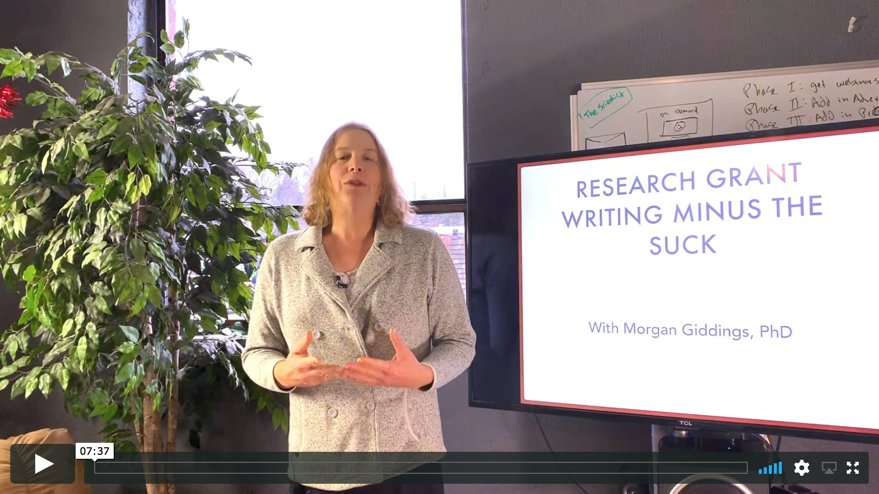
The US NIH recently changed the grant format, among other things adding a new section titled “Innovation.” Many of us have wondered: how can we convey innovation if we’re using standard techniques and methods? Morgan has some ideas on this, illustrated with an iPad and a razor.
Morgan was invited to participate in a meeting designed to give feedback to the NIH for the future of informatics for handling the flood of data from the “post genome” era of biology. It is a huge challenge. But in the meeting, the primary focus was all about the machines – hardware and software that it will take to get it done. I was a bit frustrated that there wasn’t more about the “people” in the meeting, for reasons I discuss on the video.
You sit down with palms sweaty against the keyboard, ready to write your next grant proposal to get your Big Idea (™) funded. You are dead serious and you let your reviewers know it, as you spew forth a stream of endless facts and figures about the wonderful work you do and will do. This is how to write a grant, right? You know that your proposal is very impressive, and therefore agencies like the NIH, NSF, and DOE will clamor to fund it, right? Morgan shatters your illusions in this episode of Meta Morgan TV.
Sometimes getting an NIH grant is like pulling teeth, because you’ll submit a proposal that you think is great, and get reviews back that just pick it apart. But grant reviewers almost never tell you what they’re really thinking. In this episode, Morgan reveals why that is, and how you can avoid it.
Hey, get some key tips on science careers, including an excerpt from my upcoming book…